
Moroccan Cinema as a Travelling Cinema: Visibility, Circulation, and Global Encounters
Moroccan cinema has gradually transformed into a dynamic force that extends far beyond the borders of its own country, continuously moving across various cultural, geographic, and intellectual spaces. This evolution has led to a cinema that is both deeply rooted in local realities and highly attuned to global discourses. As Moroccan films travel through international film festivals, streaming platforms, and global academic discussions, they encounter a complex interplay of visibility and expectations.
In this context, Moroccan cinema can be understood as a travelling cinema: a cinema that does not simply reflect the society it originates from but actively engages with external interpretations. The journey of these films involves a delicate negotiation between the local and the global. While global exposure has opened doors to new opportunities in terms of recognition, co-production, and distribution, it has also raised questions about the ways in which Moroccan society is represented on the international stage. The global gaze often brings with it preconceived ideas about North African culture, postcolonial histories, and socio-political struggles, which influence the way Moroccan films are received and understood.
While Moroccan filmmakers continue to draw from the rich diversity of their local experiences, the need to engage with global expectations often shapes the narrative choices and aesthetic approaches of their work. The themes that resonate with local audiences may not always align with the dominant narratives favored in global cinema, leading to a tension between what is authentically Moroccan and what is deemed internationally marketable. Thus, Moroccan cinema is no longer merely a reflection of national realities but a space where filmmakers must continuously navigate between intimacy and visibility, local specificity and global universality.
The journey of Moroccan cinema abroad reveals deeper questions about cultural exchange and representation. How do Moroccan filmmakers respond to global expectations while maintaining their cultural authenticity? What is gained and what is lost in the process of making local stories travel across borders? These questions form the core of this article, which seeks to explore how Moroccan cinema articulates this delicate balance through social realism, the representation of marginalized voices, and its participation in the global film circuit.
Rather than serving as a transparent mirror of Moroccan society, contemporary Moroccan cinema operates as a fluid space of negotiation. It is in this space, between local stories and global screens, that the meaning of Moroccan films is continuously constructed and deconstructed, in dialogue with both home and the world.
Social Realism and the Representation of Marginal Lives
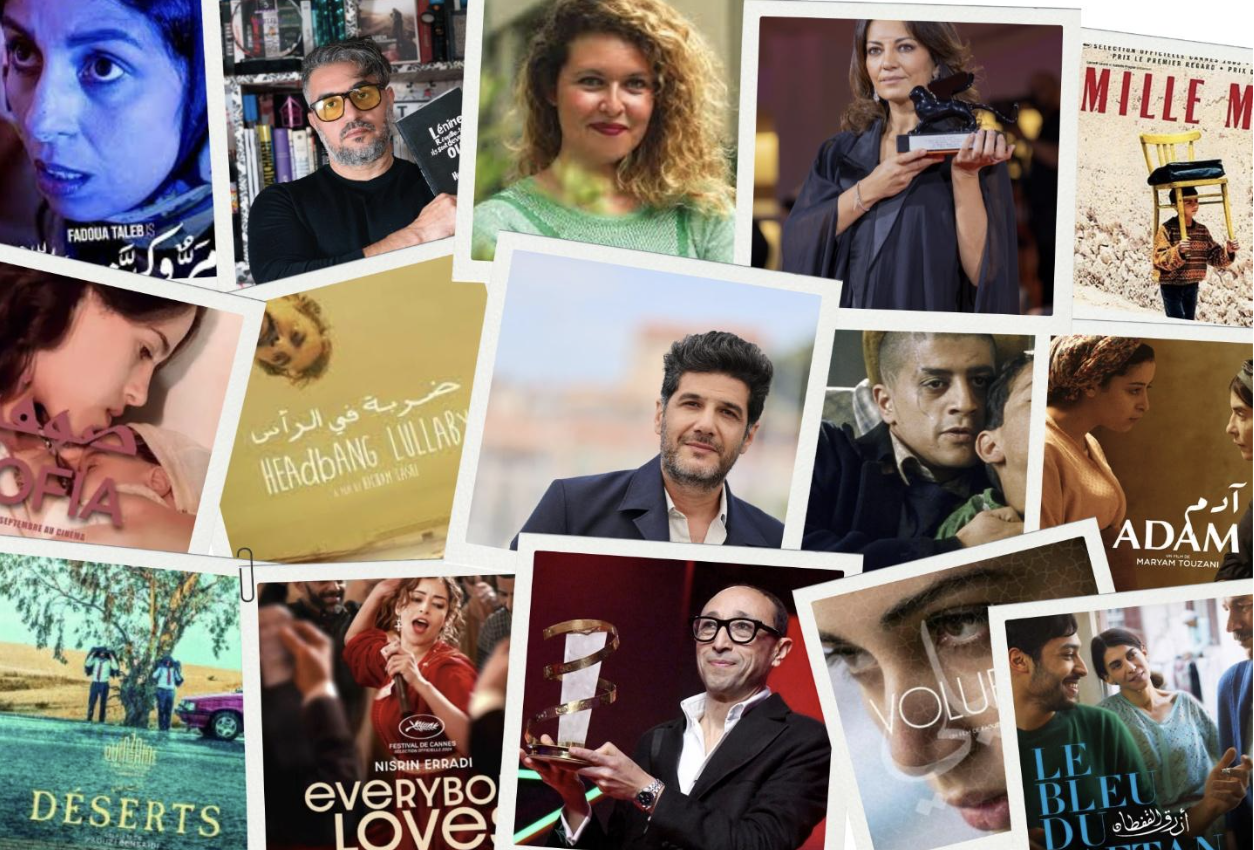
Contemporary Moroccan cinema has become an essential vehicle for portraying the lived realities of marginalized groups, offering a unique window into the complexities of Moroccan society. Rooted in social realism, these films depict the everyday struggles of individuals who often remain invisible in mainstream discourse, whether due to poverty, gender, or social stigmas. Moroccan filmmakers explore the lives of those on the margins, from street children to sex workers, to reveal the hidden, often uncomfortable, truths of life in Morocco. These films do not seek to romanticize or idealize; instead, they present a raw and unflinching look at the harsh realities that many face daily. For example, in films like Ali Zaoua: Prince of the Streets (2000), directed by Nabil Ayouch, the lives of homeless children living on the streets of Casablanca are laid bare. Through this portrayal, Ayouch gives voice to a group of children usually excluded from both social and cinematic narratives, urging viewers to confront the systemic issues that perpetuate urban poverty. Similarly, Much Loved (2015), another work by Ayouch, portrays the lives of sex workers in Marrakech. Despite its controversial reception in Morocco, the film gained international recognition for its unapologetic look at the lives of women who are often pushed to the fringes of society. By focusing on their emotional depth and resilience, Ayouch challenges both local and global audiences to reconsider their assumptions about women’s roles in Moroccan society and the stigmatization they endure.
These films, among others, represent a growing trend in Moroccan cinema: a shift towards representing marginal voices, those who do not fit into the idealized images often promoted by the media or government narratives. In many ways, these marginalized characters become the embodiment of the contradictions within Moroccan society, highlighting issues of poverty, gender inequality, sexual repression, and social exclusion. By giving these characters a platform, filmmakers create a space for social critique and reflection, encouraging audiences to engage with the issues that are often overlooked in the public sphere. For example, The Blue Caftan (2022), directed by Maryam Touzani, tells the story of a tailor in Casablanca whose personal struggles with his sexual identity reflect broader societal tensions around gender and desire. This portrayal of internal conflict, coupled with the repressive social environment, speaks to the often invisible lives of those who must navigate societal expectations and personal identity in silence.
Everyday Life, Intimacy, and the Politics of the Ordinary
Moreover, Moroccan cinema also explores everyday life in a way that goes beyond overt political or social commentary, focusing on the quieter, more intimate moments that make up the human experience. Films like Adam (2019), also directed by Touzani, capture the lives of two women, a widow and a young woman facing an unplanned pregnancy, as they navigate the societal pressures surrounding their lives. Through their evolving relationship, the film portrays a more subtle but no less important aspect of Moroccan society: the emotional and psychological challenges that individuals, particularly women, face as they attempt to carve out space for themselves in a world defined by rigid expectations and norms. These portrayals of intimate relationships and personal growth provide a deeper understanding of the struggles that individuals experience as they try to reconcile personal desires with societal constraints.
At the heart of these films is a desire to humanize the characters, to show that despite their hardships, they possess the same dignity, complexity, and humanity as any other person. The importance of authentic representation cannot be overstated, as it gives voice to those who are often excluded from the larger conversation about Moroccan identity and social progress. In Razzia (2017), directed by Nabil Ayouch, multiple interconnected stories unfold, revealing the ways in which political and cultural conservatism impact individuals’ daily lives. One of the film’s central characters, a young woman named Amine, seeks to assert her independence in a society that continually seeks to limit her choices. Ayouch’s decision to focus on young women’s experiences within a restrictive society speaks to the growing visibility of women’s stories in Moroccan cinema and the increasing demand for gender equality in public and private life.
New Voices and Diverse Aesthetics in Contemporary Moroccan Cinema
While Nabil Ayouch remains one of the most recognized figures in Moroccan cinema, particularly for his unflinching portrayal of social issues and marginalized groups, there is now a growing wave of filmmakers who are gaining international recognition for their distinct voices and unique perspectives. Directors like Faouzi Bensaïdi, Hichem Lasri, and Meryem Benmbarek are emerging as prominent figures, each contributing to the diversity of Moroccan cinema on the global stage.
Faouzi Bensaïdi is known for his multifaceted approach to storytelling, blending elements of social realism with a strong aesthetic vision. His works often explore themes of identity, alienation, and the struggles of contemporary life in Moroccan society. Films like Marock (2005) and What a Wonderful World (2006) touch on issues of youth culture, class divisions, and gender roles in modern Morocco. Bensaïdi’s cinema often challenges cultural taboos, providing a nuanced critique of Moroccan society and its evolving dynamics in the context of globalization and modernization.
Hichem Lasri, on the other hand, brings a more experimental, avant-garde approach to his films. With works like The End (2011) and The Night of the Kings (2020), Lasri’s cinema explores psychological depth, existential questions, and social unrest. His films often blur the lines between reality and fantasy, creating a space for reflecting on the tensions between Morocco’s traditional values and its growing engagement with global modernity. Through his innovative narrative styles and complex characters, Lasri engages deeply with issues of individual freedom and the collective identity of Moroccan society.
Meryem Benmbarek, one of the rising voices in Moroccan cinema, is known for her fresh approach to storytelling, particularly in her critically acclaimed film Sofia (2018), which examines social and family pressures in contemporary Morocco, particularly around issues of out-of-wedlock pregnancies and class mobility. Benmbarek’s works reflect the voices of young women navigating between tradition and modernity, and her films often explore the complexities of female identity in a rapidly changing society.
Each of these filmmakers brings a distinct perspective to Moroccan cinema, addressing different socio-political issues and social dynamics in contemporary Morocco. Their works add depth to the country’s cinematic landscape, highlighting the ongoing dialogue between local narratives and global cinematic trends. While Ayouch’s films often focus on the harsh realities of marginalized groups, directors like Bensaïdi, Lasri, and Benmbarek focus on broader cultural, psychological, and individual struggles, thus expanding the thematic range of Moroccan cinema. This emerging generation of filmmakers is contributing to a more diverse, nuanced, and internationally relevant portrayal of Moroccan life, moving beyond the traditional frames of representation to engage with a wider array of social, cultural, and personal questions.
Films like these reflect an increasing global awareness of Moroccan social issues, particularly those related to gender, sexuality, and inequality. As these films travel beyond Morocco’s borders, they not only engage with local audiences but also enter global conversations about marginalization and social justice. Their success at international film festivals demonstrates a growing appetite for stories that challenge conventional narratives, offering more complex and nuanced portrayals of Moroccan society. However, the international reception of these films often reveals the tension between local realities and global expectations. While the films are celebrated abroad for their boldness and social critique, they often provoke controversy and debate back home, where issues such as sexuality and gender equality are still taboo subjects in many circles. This tension underscores the challenges that Moroccan filmmakers face as they navigate the fine line between authentic storytelling and the desire for international acclaim.
Between Becoming and Belonging: Moroccan Cinema as a Space of Negotiation
As Stuart Hall, the cultural theorist and sociologist, famously argued, cultural identity is not a fixed essence but a continuous process, shaped as much by movement and encounter as by history and memory. This idea resonates strongly with contemporary Moroccan cinema, which unfolds in a constant state of becoming. As Moroccan films circulate across borders, festivals, and audiences, they do not simply present stable images of society; they evolve through interpretation, reception, and dialogue. Cinema, in this sense, becomes less a mirror of reality than a living space where meanings are negotiated and redefined.
The trajectory of Moroccan cinema today reveals a field marked by plurality rather than uniformity. There is no single Moroccan cinematic voice, but rather a constellation of narratives, aesthetics, and sensibilities that reflect the diversity of social experiences. Through stories rooted in social realism, intimate portrayals of everyday life, and more experimental forms, Moroccan filmmakers articulate realities that resist simplification. These films invite viewers to engage with Moroccan society not through stereotypes or fixed categories, but through lived experiences, contradictions, and emotional depth.
As local stories travel globally, they inevitably encounter expectations shaped by dominant narratives about the Global South, postcolonial societies, and cultural difference. Yet contemporary Moroccan cinema often pushes back against these frameworks. Rather than conforming entirely to external expectations, many films maintain a strong attachment to local specificity, silence, ambiguity, and moral complexity. This tension between visibility and fidelity to lived realities is not accidental; it is central to the creative process and reflects the filmmakers’ awareness of both local responsibility and global circulation.
Ultimately, contemporary Moroccan cinema inhabits an in-between space between home and the world, intimacy and visibility. It is precisely within this space that its expressive power emerges. Rather than offering fixed representations, Moroccan films invite dialogue, empathy, and critical reflection, allowing global audiences to encounter Moroccan realities in their full complexity and humanity.